PROLOGUE: The Sovereign Wake-Up Call
Your biology is running out of daylight, and the bed you refuse to leave is a rehearsal for a coffin. While you negotiate with the thermostat, arrange your cushions, and defer the friction of existence, the uncaring physics of the universe are quietly measuring the thickness of your armor. They find nothing but gauze. The hours of this morning do not belong to a cyclical loop; they are non-renewable, sovereign collateral that you are burning to purchase a few more minutes of pleasant numbness.
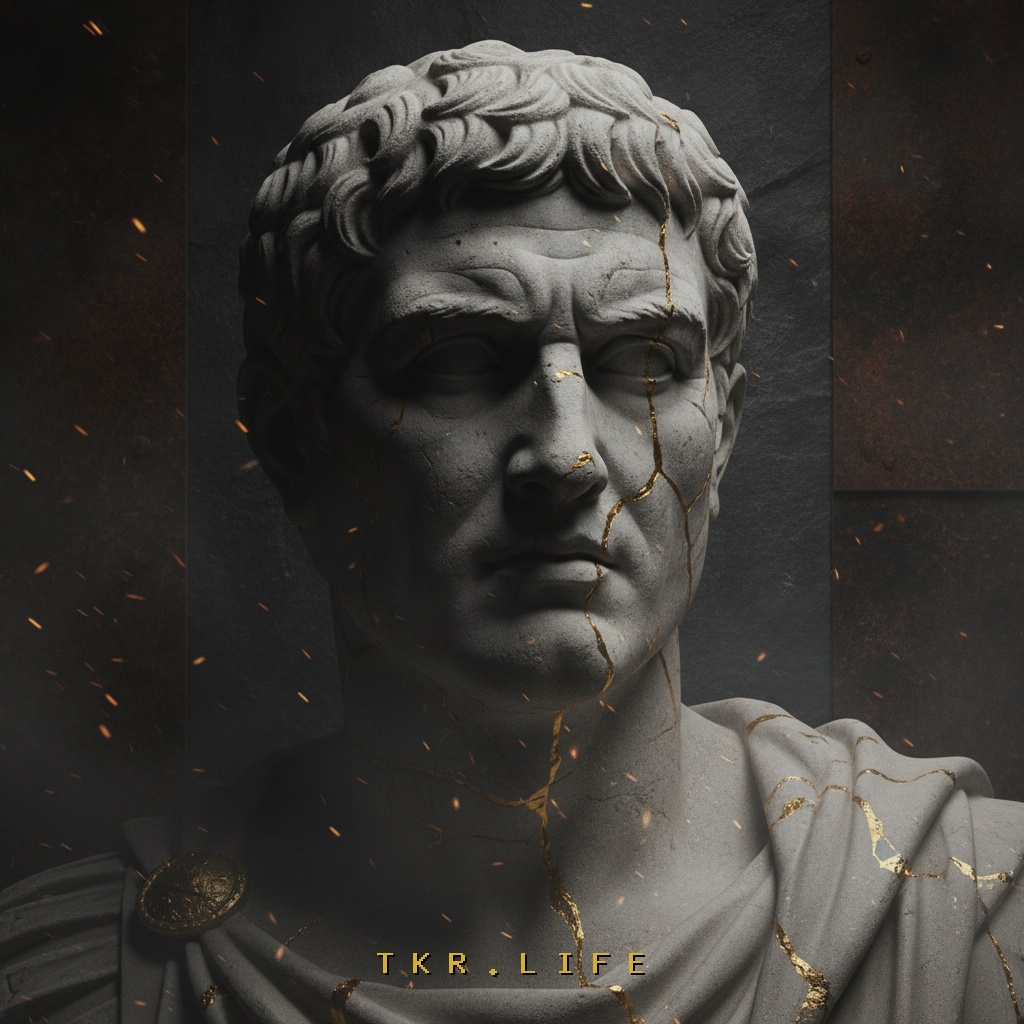
Look at your hands. They were engineered by hundreds of thousands of years of famine, war, toolcraft, and brutal kinetic struggle. Yet you employ them primarily to stroke illuminated glass and insulate yourself from the weather. This is not civilization; it is self-induced domestication. Every time you elect the path of least biological and psychological expenditure, you are not merely resting. You are actively voting to render the person you will become tomorrow more fragile, more easily terrified, and wholly unequipped for the inevitable impact of reality.
CHAPTER I: The Anatomy of the Signal
Comfort is not a benign pause in your trajectory; it is a corrosive solvent. When we state that comfort softens your future, we are describing a physical, psychological, and systemic degeneration that occurs when an organism is shielded from load. The illusion you harbor is that your future self will somehow inherit your current potential while exempt from your current compromises. You imagine that your will remains sharp in storage, like a blade in a scabbard, waiting to be drawn when a true crisis appears.
Stoic philosophy and behavioral science dismantle this fantasy completely. The blade does not stay sharp in storage; it rusts into the sheath. Seneca warned his friend Lucilius that the mind which has not known hardship is thrown into vertigo by the slightest tremor. When you systematically remove discomfort from your immediate environment—temperature variations, physical exhaustion, intellectual strain, the terror of public exposure—you reprogram your nervous system to interpret baseline friction as an existential threat.
“No man is more unhappy than he who never faces adversity. For he is not permitted to prove himself.” — Seneca
By engineering an existence of seamless cushions, instant deliveries, and frictionless interactions, you are not elevating your standard of living; you are lowering your threshold of collapse. You soften your future because you guarantee that when the weather turns—and the weather always turns—the impact will not merely challenge you; it will shatter you. You are manufacturing a brittle creature who will require ideal atmospheric conditions just to function.
CHAPTER II: The Historical Crucible
In the year 134 BC, the Roman Republic stood humiliated before the walls of Numantia, a small, stubborn Celtiberian stronghold in northern Spain. For over a decade, successive Roman consular armies, possessing vastly superior numbers, engineering, and resources, had been repeatedly routed, disgraced, and forced into ignominious treaties by a handful of starving barbarians. When the Senate finally dispatched Publius Cornelius Scipio Aemilianus—the conqueror of Carthage—to salvage the campaign, he did not immediately march on the enemy. He rode into the Roman encampment and looked at his own men.
What he witnessed was not an army, but an armed resort. The legionaries had surrounded themselves with thousands of camp followers, merchants of luxury, prostitutes, warm baths, massage oils, and wagons carrying private bedding. The soldiers refused to carry their own supplies; they rode on mules while their equipment was lugged by beasts of burden. They had insulated themselves against the bitter Iberian cold with layered furs and delicate wines. They had chosen comfort, and the price they paid was terror: the mere sighting of a Numantian scout was enough to send an entire Roman cohort into panic.
Scipio did not negotiate. He did not deliver motivational speeches. He understood that comfort had softened their future into impending butchery. His first decree was an absolute purge: two thousand merchants, fortune-tellers, and camp followers were expelled on pain of death. He confiscated every wagon, every beast of burden, and every piece of non-regulation bedding. He ordered all luxury cooking utensils smashed; the legionaries were permitted only a spit for roasting meat and a single bronze pot. Most decisively, he ordered that no soldier was allowed to sleep on a mattress. If they wished to rest, they slept on the frozen earth, wrapped in their military cloaks.
For months, Scipio refused to engage the Numantians. Instead, he marched his men back and forth across the frozen highlands, carrying thirty days of grain and heavy palisades on their backs. He made them dig vast trenches and ramparts by day, only to fill them back in by night. When a soldier complained of the labor, Scipio remarked: “Since you do not know how to fight, you had better learn how to dig.”
He re-hardened their tissue. He returned them to cold, stone, and heavy iron. When the Roman army finally encircled Numantia, they did not waver. They did not break. They were no longer soft men hoping for survival; they were an engine of inexorable geometry. Scipio understood an immutable law: you cannot preserve capability in an environment of indulgence. If you soften the present, the future will extract its debt in blood.
CHAPTER III: The Biological Ledger & The Hidden Tax of Hesitation
The biology of the human animal recognizes only two states: adaptation to stress, or adaptation to ease. The physiological principle of hormesis dictates that an organism thrives only when subjected to intermittent, non-lethal doses of environmental, physical, and psychological stressors. Without these inputs, the biological ledger balances itself through atrophy.
- Bone Density & Muscular Architecture: Subjected to zero gravity, an astronaut’s body instantly begins dumping calcium into the urine; why maintain an expensive skeleton when there is no weight to bear? The same occurs in your psychological architecture when you live in zero-gravity comfort.
- Neuroplasticity & Synaptic Pruning: Your brain actively purges synaptic pathways that are not demanded by rigorous problem-solving or emotional regulation under pressure. When you consume easy answers, your capacity for complex synthesis degrades.
- Allostatic Fragility: Chronic shelter from acute stressors dysregulates the autonomic nervous system. The person who never encounters cold, hunger, or intense physical exertion experiences high-grade anxiety from trivial social frictions.
Every time you hesitate before an uncomfortable duty—whether it is a freezing morning run, a difficult confrontation with a business partner, or the grueling deep work required to master a discipline—you pay a hidden compounding tax. Hesitation is the biological hesitation to leave thermostatic equilibrium. But while you sit in that warm stasis, your competitors are hardening their systems, market dynamics are shifting, and the biological clock is ruthlessly consuming your finite store of daylight. You are trading your sovereign future for an afternoon of slack-jawed safety.
CHAPTER IV: Modern Sedation vs Sovereign Output
We inhabit an economic architecture explicitly designed to monetize your flaccidity. Modern consumer technology is an engineered conspiracy against human resilience. The business model of the 21st century can be summarized cleanly: identify a point of natural friction in human existence, eliminate it, and charge the user their sovereignty for the service.
You no longer need to navigate; the screen directs your path. You no longer need to remember; the cloud stores your thoughts. You no longer need to endure loneliness or boredom; algorithmic dopamine engines deliver hyper-palatable micro-stimuli straight to your visual cortex every eight seconds. You are being farmed for your attention while kept in a state of warm, docile sedation. The notification chime is the modern bell of the livestock pen.
Sovereign output requires the exact opposite conditions. It demands that you sit with excruciating boredom until the mind breaks through into creative synthesis. It requires that you hold your focus on a single, complex problem for four uninterrupted hours while your dopamine-starved brain screams for relief. When you surrender to the digital sedative, you are not merely wasting time; you are systematically disabling the executive neural circuits that separate an autonomous human being from an obedient consumer unit. The world does not need another comfortable spectator. It needs minds forged in deep, unpolluted silence.
CHAPTER V: The 5 Sovereign Battle Protocols for Today
Philosophy without operational execution is merely decorative cowardice. Over the next twelve hours, you will impose deliberate, non-negotiable friction upon your immediate environment. These five protocols are designed to shock your system out of thermostatic complacency.
1. The Protocol of Thermal & Postural Discomfort
Begin your day by stepping out of the climate-controlled envelope. Take a cold shower for three minutes without adjusting the valve to a comfortable lukewarm mix. Step out, do not immediately wrap yourself in excessive warmth, and perform your morning work without an ergonomic recliner. Sit upright on a wooden chair or stand. Remind your spine and your nervous system that comfort is an earned luxury, not an ambient entitlement.
2. The Friction Front-Loading Mandate
Identify the single most emotionally taxing, intellectually demanding, or physically intimidating task on your docket today. You are forbidden from opening email, checking social metrics, or organizing your desk until that specific task has received ninety minutes of direct, unyielding labor. Do not warm up with easy chores. Attack the heaviest load when your energy is pristine.
3. The Zero-Buffer Input Fast
For the next twelve hours, eradicate all synthetic dopamine inputs during transit and transition. When you drive, the radio remains silent. When you walk, leave your headphones in your pocket. When you wait in line, your phone remains untouched. Force your brain to inhabit the naked reality of the present moment without the pacifier of background audio or infinite feeds. Reclaim your internal monologue.
4. The Physical Over-Delivery
Sometime before dusk, impose an acute physical demand upon your body that forces your mind to negotiate with quitting. Run until your lungs burn; lift until the bar slows; carry weight until your grip threatens to fail. You must reach that precise psychological junction where your comfort-seeking voice whispers, “This is enough.” Hear that voice, identify it as the enemy of your future, and execute two more repetitions or another five minutes of movement.
5. The Strategic Deprivation of Speech
Practice radical verbal restraint. Do not complain about the weather, your fatigue, your workload, or the actions of others. When someone provokes you or seeks an argument, practice the discipline of the pause. Speak only what is true, necessary, and useful. The energy typically dissipated through superficial chatter and venting must be retained within your system to power sovereign work.
CHAPTER VI: The Evening Ledger & Mental Audit
When the sun retreats and the world returns to quiet, you must sit in solitary judgment of the day you have just expended. Do not consult the opinions of your peers; consult your own internal magistrate. Open your journal and answer these four questions with unvarnished, brutal honesty:
The Four Piercing Questions:
- Where did I trade long-term capability for short-term relief today? Pinpoint the exact moment you backed down from friction—a deferred phone call, a skipped workout, an indulged distraction—and record the cost.
- Did I behave as the master of my impulses, or as a well-trained domestic animal responding to digital treats? Audit your screen time and your immediate physical reactions to external stimuli.
- If the person I am destined to become five years from now watched my conduct today, would they weep at my cowardice or respect my preparation? Remove your excuses; look only at the kinetic evidence of your output.
- What unnecessary layer of comfort am I prepared to strip away tomorrow morning? Identify the next layer of soft tissue you will cut from your daily routine to sharpen your edge.
EPILOGUE: Closing Conviction
The grave does not negotiate, and the future shows no mercy to those who spent their youth softening their limbs. You have been granted a brief, roaring spark of consciousness inside a universe governed by entropic violence. To spend that spark seeking a slightly softer chair, a slightly warmer room, and a slightly less demanding schedule is an absolute insult to the ancestral line that fought through ice, beasts, and famine to deliver you here.
Cast off the narcotics of modern ease. Step out into the wind. Pick up the heavy load that everyone else is walking around. Let others seek safety; you have a destiny to forge, and steel is not made in a feather bed. Rise, harden your frame, and take the sovereign ground that belongs to you.