PROLOGUE: The Sovereign Wake-Up Call
At this exact second, your cells are burning through an unrenewable endowment of metabolic daylight. There is no escrow account for your vitality; the breath you just discharged is gone, struck permanently from your balance sheet. Yet you operate under the tranquil hallucination that life is an endless, forgiving afternoon—that the ground beneath your feet will remain stable while you negotiate with your cowardice, postpone your masterpiece, and seek shelter in the plush corners of your routine.
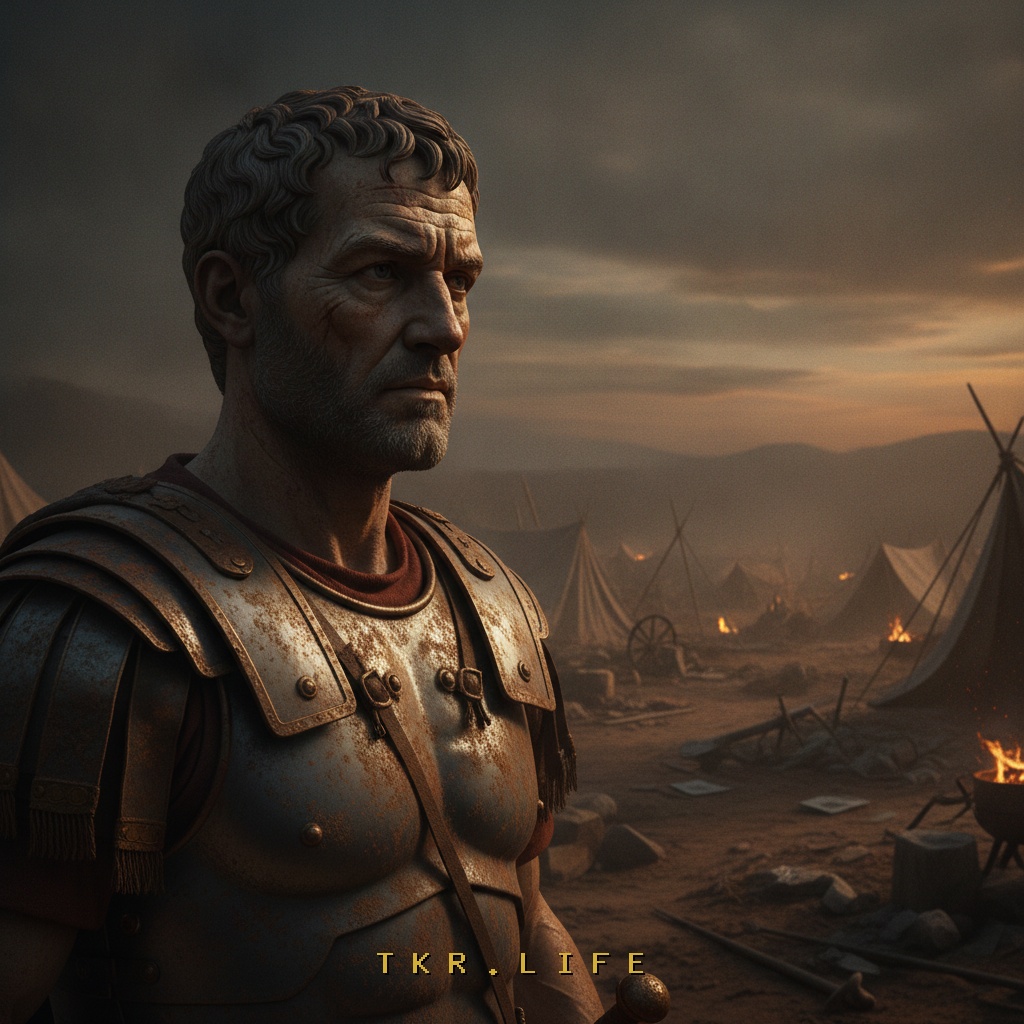
Nature recognizes no such entitlement. Left unworked, an iron blade does not remain intact; it oxidizes. An unstrained muscle does not preserve its power; it atrophies into fibrous slop. The universe is governed by an unrelenting entropic pull that violently penalizes stillness. When you withdraw from tension, you do not freeze yourself in a state of preserved potential. You begin to rot. Comfort is not a neutral pasture where you catch your breath; it is a solvent. The moment you declare an armistice with difficulty, the hairline fissures in your discipline begin to widen, spreading under the quiet, toxic weight of your self-indulgence.
CHAPTER I: The Anatomy of the Signal
In classical materials science, there is a phenomenon known as mechanical creep: the tendency of a solid material to slowly deform permanently under the influence of persistent, low-level stresses or the absence of corrective tension. When we observe that ease stretches weakness, we are examining a psychological and structural law of identical cruelty. Weakness is never an isolated, static event. It is an elastic defect.
Under the heat of unyielding demand and relentless friction, that defect is compressed, cauterized, and hemmed in by necessity. You do not have the luxury of giving in to your vanity when the sea is breaching the hull. You cannot indulge petulant grievances when the winter stores are empty. Pressure holds you together. It forces the scattered, undisciplined elements of your consciousness into a singular, defensive phalanx.
“Misfortune is virtue’s opportunity,” wrote Seneca to Lucilius. “Those who have known unclouded prosperity are softened by an uninterrupted calm; they collapse under the slightest blow, for they have built no internal callus against the strike of reality.”
The profound error of modern man is the belief that weakness will remain confined to the dark room where he keeps it. You tell yourself that you are only undisciplined with your morning alarm, only lazy with your physical conditioning, or only cowardly in your creative ambitions—but that when a true crisis arrives, you will summon the titan within. This is delusion. When ease enters your life, it does not leave your weaknesses where it found them. It takes the minor fracture—the five-minute delay, the rationalized cheat, the subtle concession to fatigue—and pulls it in every direction. It stretches the boundary of what you are willing to excuse. Before long, the boundary of your weakness encompasses the entirety of your will.
CHAPTER II: The Historical Crucible
In the spring of 134 BC, the Roman Republic stood publicly humiliated. Outside the small, fiercely defended hill town of Numantia in Hispania, sixty thousand Roman legionaries—the nominal masters of the Mediterranean world—had been repeatedly routed, trapped, and forced into disgraceful treaties by a force of barely four thousand Celtiberian warriors. The legions were not short on iron, grain, or tactical doctrine. They were drowned in ease.
Successive consular commanders had allowed the camp outside Numantia to morph into a bloated, ambulatory brothel of soft indulgence. Thousands of camp followers, merchants selling luxury wines, fortune-tellers, and masseuses accompanied the army. Soldiers slept on feather beds, rode horses when they should have marched on foot, and refused to dig defensive trenches because the earth bruised their hands. Ease had taken the disciplined savagery of the Roman soldier and stretched it into institutional impotence. The defect of individual laziness had expanded until the legion itself was an embarrassment to Rome.
Into this sewer of slackened will rode Publius Cornelius Scipio Aemilianus—the conqueror of Carthage, a man forged in the stoic discipline of Polybius and the ruthless standards of his lineage. Scipio did not launch an assault on Numantia. He recognized that to deploy softened men into battle was merely to orchestrate a massacre. Instead, he declared war on their ease.
His first command was unconditional: expel every single camp follower, merchant, and charlatan within twenty-four hours. He ordered every superfluous wagon burned and all private luxuries confiscated. The feather mattresses were slashed and dragged into the mud; henceforth, every legionary, from raw recruit to senior tribune, slept on the bare, frost-hardened earth wrapped only in a coarse wool cloak. He banned the use of pack animals for personal gear: “If you cannot carry your own kit, you are not a soldier; you are baggage,” he spat at them.
For months, Scipio refused to let his men look at the enemy. He forced them into endless, grueling labor. They dug vast trenches in the baking clay only to fill them back up. They marched thirty miles a day under full battle armor, carrying sixty pounds of stakes, rations, and weapons through swamp and scree. Whenever a soldier stumbled, Scipio was there, cold and unyielding: “You are covered in mud today so that you are not covered in your own blood tomorrow.”
He systematically constricted the space where their weakness had lived. By the time Scipio finally turned those legions toward the walls of Numantia, they were no longer a disorganized rabble of soft men looking for comfort. They were an engine of unbending, terrifying competence. They did not win because of some tactical revelation; they won because Scipio ripped the elastic padding of ease away from their throats until nothing remained but dense, hardened resolve.
CHAPTER III: The Biological Ledger & The Hidden Tax of Hesitation
Look at your life through the merciless prism of biological economics. Your nervous system is an adaptive prediction machine. It does not construct its baseline from your grandiose intentions, your vision boards, or the solemn vows you whisper to yourself in the shower. It calibrates its pain tolerance entirely from the environmental friction you actually survive.
When you continuously lower friction, a biological catastrophe occurs known in neurophysiology as allostatic downregulation. By chronically selecting the easiest path—the soft chair, the pre-digested media feed, the immediate comfort of high-glycemic carbohydrates, the delay of uncomfortable conversations—you signal to your limbic architecture that you cannot endure strain. Your brain adjusts its sensitivity thresholds accordingly.
Consequently, challenges that should register as trivial nuisances are interpreted by your nervous system as existential emergencies. A difficult email triggers a cortisol spike. An hour of sustained, deep intellectual labor feels like a march through the Sahara. The requirement to control your temper in an argument feels like an unbearable physical strain. Ease has stretched your weakness so wide that your emotional nervous system now bruises at the lightest touch of reality.
Furthermore, consider the invisible taxation of hesitation. Hesitation is the exact moment ease sinks its teeth into the flesh of your intent. You perceive a necessary action—initiating a grueling project, terminating a parasitical relationship, confronting an error in your work—and you pause. You reach for the anesthetic of a brief distraction. In that five-second delay, your mind rushes to build an intellectual justification for cowardice. You do not merely lose five seconds; you train your brain to equate difficulty with retreat. Hesitation is the chisel that hollows out your conviction, turning an impulsive weakness into an engrained neurological reflex.
CHAPTER IV: Modern Sedation vs Sovereign Output
You inhabit the most sophisticated pacification matrix ever constructed in the history of our species. Every trillion-dollar architecture surrounding your consciousness has been optimized for one absolute objective: the total eradication of friction from your daily experience.
Your food arrives at your door without the labor of cultivation or the heat of the stove. Your entertainment is algorithmically tailored to demand zero cognitive interpretation, feeding you an intravenous stream of synthetic dopamine while you recline in paralyzed passivity. Your social validation is mechanized through glowing pixels, granting you the counterfeit sensation of tribal belonging without requiring you to demonstrate courage, honor, or utility to a real community.
This is not an accident of technological progress; it is an economic strategy. A populace that cannot endure friction is a populace entirely dependent on consumption. The man who has lost the capacity to suffer for an objective can be sold anything that promises an escape from discomfort. The woman who cannot govern her attention is permanently rented out to advertisers, ideologues, and outrage-peddlers.
Sovereign output requires an absolute, violent rejection of this sedative ecosystem. To produce anything of lasting consequence—whether a monument of philosophical thought, an unshakeable commercial enterprise, or an incorruptible character—demands that you maintain a hostile relationship with ambient ease. The crowd will always drift downstream toward the lowest energy state, dissolving into indistinguishable mediocrity. If you wish to claim ownership of your life, you must deliberately position yourself in the white water, paddling relentlessly against the pull of this engineered domesticity.
CHAPTER V: The 5 Sovereign Battle Protocols for Today
The philosophy of the Porch is worthless if it remains trapped in the ink of an essay. You must execute. For the next twelve hours, you will impose deliberate, structural tension upon your reality. These are not aspirational recommendations; they are your direct operational rules of engagement.
- Protocol I: The Cold Kinetic Baseline. The moment your consciousness registers wakefulness, sever your connection to the mattress instantly. Do not negotiate. Do not allow your mind the luxury of a sixty-second internal debate. Drop your feet to the floor, drink water, and immediately expose your system to an intense, undeniable physical stressor—whether through bitter cold water or explosive muscular load. You must announce to your biology at second zero that ease has no jurisdiction here today.
- Protocol II: The Monastic Aperture. Select your single most intellectually demanding or strategically terrifying task for the day. Isolate it. For a minimum of ninety uninterrupted minutes, enter an airtight environment: phone physically removed to another room, all secondary browser tabs liquidated, all notifications executed. If your mind wanders to seek relief, force your eyes back to the page. Endure the psychic itch of boredom until it breaks beneath your focus.
- Protocol III: The Elimination of the Pretext. Identify one micro-habit of ease you habitually use to lubricate your cowardice—the mid-afternoon sugar binge, the reflexive checking of social feeds when a document gets difficult, the leaning back in your chair to zone out. Ban it unconditionally for the remainder of the sun’s cycle. When the impulse strikes, look directly at it, name it as weakness attempting to widen its perimeter, and stand firm without flinching.
- Protocol IV: The Unvarnished Confrontation. There is a conversation you are evading, a standard you are failing to uphold with a subordinate or peer, or a brutal truth about your work you have concealed behind layers of jargon. Face it today. Deliver the truth cleanly, without venom, without apologetic padding, and without seeking approval. Strip the interaction of all comforting theatricality.
- Protocol V: The Deliberate Inconvenience. Seek out three moments today where you can intentionally choose the harder logistical alternative. Walk instead of taking the vehicle. Carry the weight instead of rolling it. Stand while working instead of sinking into the chair. Take the stairs three at a time until your lungs burn. Teach your body through continuous, petty physical proofs that ease is an unwanted interloper in your kingdom.
CHAPTER VI: The Evening Ledger & Mental Audit
When the sun collapses and the noise of the daylight world fades, do not retreat into the blue glow of a screen to drug yourself into unconsciousness. Sit alone in the silence of your quarters with a clean ledger and an unvarnished mirror. Subject yourself to the four questions that separate the sovereign soul from the sleepwalker:
- Where did I secretly bargain with difficulty today, and what specific weakness did I allow to stretch in that moment of surrender?
- Did I treat my hours as if I owned a limitless supply of them, or did I execute my duties with the severe precision of a mortal condemned to die?
- In what task did I seek the applause of others rather than the iron standard of my own conscience?
- If this day were the definitive, final chapter of my biography, would it stand as a monument to self-mastery, or as a pathetic apology for unexercised potential?
Write your answers down in plain, uncompromising language. Do not rationalize. Do not soften the blow. If you failed, look at the failure with cold, clinical detachment so that you may strike it down with absolute violence when dawn returns.
EPILOGUE: Closing Conviction
The world is soft, and it wants you soft with it. It will whisper to you that you have worked hard enough, that you deserve a reprieve, that everyone else is cutting corners, so why shouldn’t you? It will offer you a thousand plush cushions upon which to rest your head while it quietly saws away at your dignity.
Reject the whisper. Understand the horrific mathematics of your condition: every millimeter of ease you grant yourself is a millimeter stolen from your destiny. Weakness does not sleep; it waits for the slackening of your grip, waiting to stretch its tentacles through every unkept promise and every softened standard until you are a hollow caricature of the person you were meant to be.
Tighten the tension. Pull the strings of your will until they hum like a war bow. Step out into the relentless, beautiful friction of the arena and demand of yourself what no one else has the courage to ask. The ease you are craving is your executioner in disguise. Turn your back on it, embrace the strain, and become impenetrable.