Time does not hesitate, negotiate, or pause for emotional recovery. Every single breath expired is an irreversible biological deduction from your sovereign ledger. The illusion of infinite daylight is the primary narcotic of the undisciplined, lulling the ambitious into an indefinite rehearsal for a life they will never actually begin.
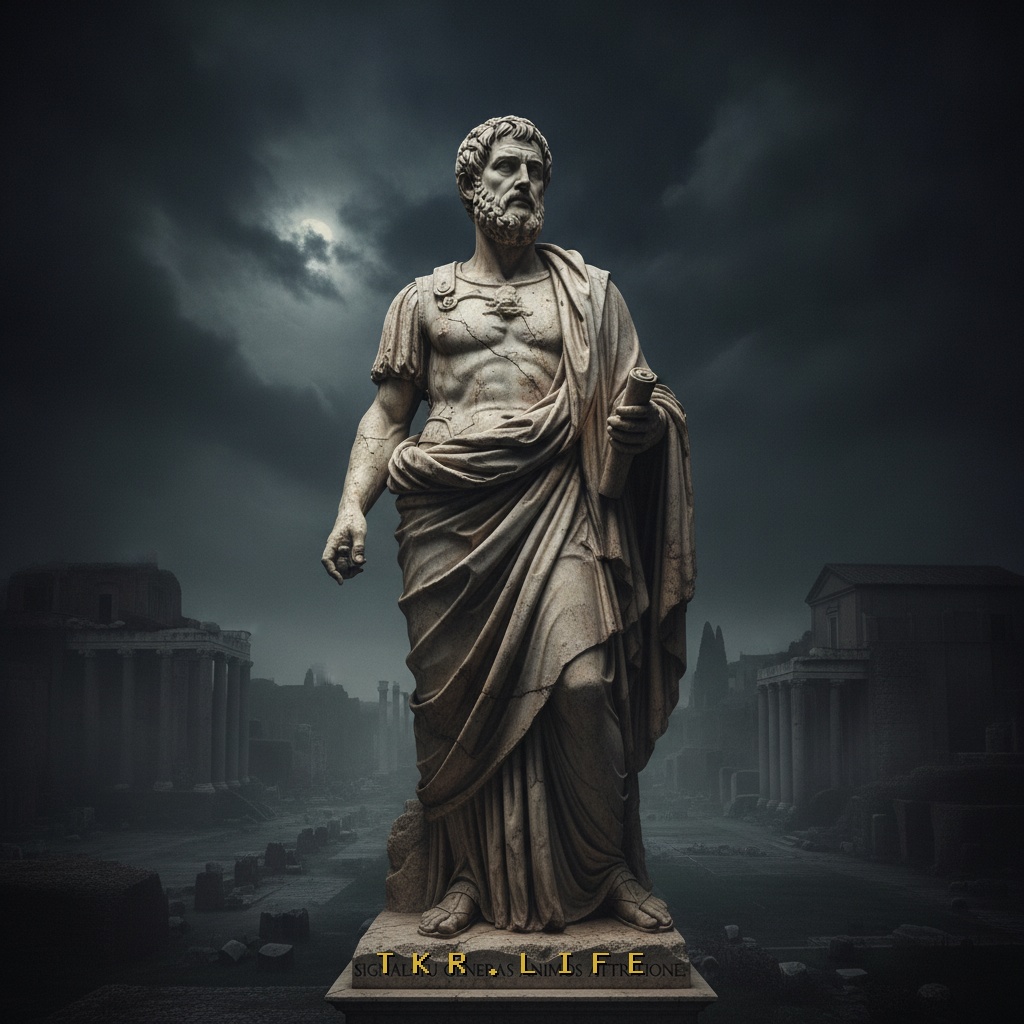
Prologue: The Sovereign Wake-Up Call
Look at your hands. Look at the room around you. The seconds slipping through your fingers right now are not an abstract numerical exercise; they are your actual, finite mortal tissue dissolving into entropy. You woke up today with an unrepeatable allocation of hours—hours that hundreds of thousands of human beings who drew their last breath last night would give empires to possess. Yet the modern default is to treat the morning as an administrative chore and the afternoon as an endurance test, waiting for some distant, mythical date when circumstances will finally be convenient enough for greatness.
“You live as if you were destined to live forever, no thought of your frailty ever enters your head, of how much time has already gone by you take no heed. You squander time as if you drew from a full and abundant supply, though all the while that day which you bestow on some person or thing is perhaps your last.” — Lucius Annaeus Seneca, On the Shortness of Life
Chapter I: The Anatomy of the Signal
To understand the mandate of You generate courage by friction., one must first deconstruct the pervasive sickness of modern comfort. The human nervous system was forged in environments of brutal scarcity and physical danger, where hesitation resulted in immediate biological termination. Today, we inhabit an artificial dome of synthetic safety: climate-controlled rooms, algorithmic entertainment on demand, and supermarket shelves stocked with calories that required zero physical combat.
In removing mortal peril, civilization simultaneously removed the primary forcing function for human urgency. Without the visceral reminder of imminent death, the mind invents trivial anxieties to fill the vacuum: social posturing, corporate politics, digital outrage, and perpetual self-doubt. We fret over optical trivialities while casually throwing away four hours an afternoon scrolling through the commodified thoughts of strangers.
Chapter II: The Historical Crucible — Marcus Aurelius on the Frontier
Consider Marcus Aurelius in the winter of 174 AD. The Roman Empire was collapsing under the twin hammer blows of the Antonine Plague—which decimated a third of the empire’s population—and the Marcomannic Wars along the freezing, treacherous marshes of the Danubian frontier. Marcus was not sitting in an air-conditioned library pontificating on abstract ethics; he was an aging, chronically ill emperor sleeping in a canvas military tent, surrounded by dying legionaries, treason in the eastern provinces, and the relentless threat of barbarian incursions.
It was in this crucible of mud, blood, and disease that he opened his private notebooks by candlelight to write: ‘Waste no more time arguing about what a good man should be. Be one.’ Marcus understood that circumstances are never optimal. He did not wait for peace, or good health, or popular approval to embody supreme self-mastery. He recognized that the friction of his era was not an obstacle to his virtue—it was the very material from which virtue had to be forged.
Chapter III: The Biological Ledger & The Hidden Tax of Hesitation
Every human life is a closed mathematical system. Assuming an average lifespan of eighty years, you are allotted roughly 4,160 weeks on this earth. If you are thirty-five, more than 1,820 of those weeks are permanently incinerated—gone beyond recall, negotiation, or appeal. What remains is not guaranteed; it is a dwindling probability distribution subject to biological decay, disease, and sudden kinetic termination.
Hesitation is the most expensive transaction in human psychology. When you postpone a difficult conversation, delay the launch of a critical project, or surrender your focus to passive consumption, you are not merely deferring effort—you are paying an exorbitant temporal tax. You are exchanging sovereign hours that will never return for temporary emotional sedation. To hesitate is to tacitly endorse the belief that your future self possesses infinite time to clean up the wreckage of your current complacency.
Chapter IV: Modern Sedation vs. Sovereign Output
The modern digital ecosystem is engineered with predatory precision to capture and monetize your cognitive daylight. Trillion-dollar corporations employ armies of behavioral neuroscientists whose sole mandate is to keep your thumb moving across a glass screen for another eleven minutes. Every push notification, algorithmic feed, and auto-playing video is an engineered interruption designed to shatter deep work and reduce your sovereign intellect to a twitching, reactive consumer node.
To achieve anything of lasting consequence in the twenty-first century requires active, aggressive cognitive defense. You must treat your attention with the same ferocity that a garrison defends a fortress against a siege. The difference between an elite practitioner and a mediocre spectator is not innate genetic genius; it is the uncompromising refusal to surrender the morning to peripheral noise.
Chapter V: The 5 Sovereign Battle Protocols for Today
Philosophy without tactical execution is merely intellectual masturbation. For the remainder of this calendar day, hold yourself to these five uncompromising rules of engagement:
- Protocol 1: The 90-Minute Sovereign Fortress. Carve out one unbroken 90-minute block today where all Wi-Fi, notifications, and communications are severed. Direct 100% of your cognitive voltage toward your primary, highest-leverage objective. No multi-tasking. No excuses.
- Protocol 2: The Brutal Elimination Audit. Review your schedule for today and identify one meeting, conversation, or peripheral obligation that adds zero sovereign value. Strike it from your ledger immediately. Reclaim the daylight.
- Protocol 3: Physical Friction Resistance. When your biological comfort demands avoidance—whether it is a cold shower, a grueling set of physical exertion, or confronting difficult technical work—move toward the friction immediately. Train your nervous system to obey reason over comfort.
- Protocol 4: The Zero-Complaint Mandate. For the next twelve hours, utter not a single complaint about circumstances, weather, colleagues, or physical fatigue. Energy spent whining is energy stolen from execution.
- Protocol 5: The Memento Mori Checkpoint. At noon and at sunset, pause for sixty seconds. Look at the sun, touch your pulse, and remind yourself: ‘This day is half-dead, and I will never walk it again.’ Let that certainty shatter your procrastination.
Chapter VI: The Evening Ledger & Mental Audit
Tonight, when the sun descends below the horizon and the house falls into silence, you will sit alone with your conscience. In that quiet dark, the opinions of social media, the validation of peers, and the excuses you manufactured during the day will evaporate. Only one question will remain: Did you advance, or did you surrender?
Conduct your audit with surgical honesty:
- Did I own my morning, or did I hand my attention to digital distractions?
- Where did I choose comfort over courage when friction presented itself?
- What concrete artifact of value did I produce today that justifies my biological oxygen consumption?
- If this was my final day on earth, could I look at my effort with clean conscience?
Epilogue: Closing Conviction
The world does not owe you another sunrise. The universe is entirely indifferent to your potential, your intentions, and your unfinished plans. The only measure of your existence is what you convert from potential into kinetic reality before the clock runs out.
Stand up. Close the peripheral browser tabs. Sever the distractions. Execute your mandate before the daylight dies.