PROLOGUE: The Sovereign Wake-Up Call
At this precise millisecond, your mitochondria are oxidizing substrates to keep your heart beating, consuming an irreplaceable allocation of chemical currency that will never be returned to your biological ledger. You did not wake up today with an infinite reserve of daylight. You woke up with an expiring contract. Yet you move through your morning with the sluggish, insulated gait of an immortal, harboring the grotesque delusion that you can negotiate with time.
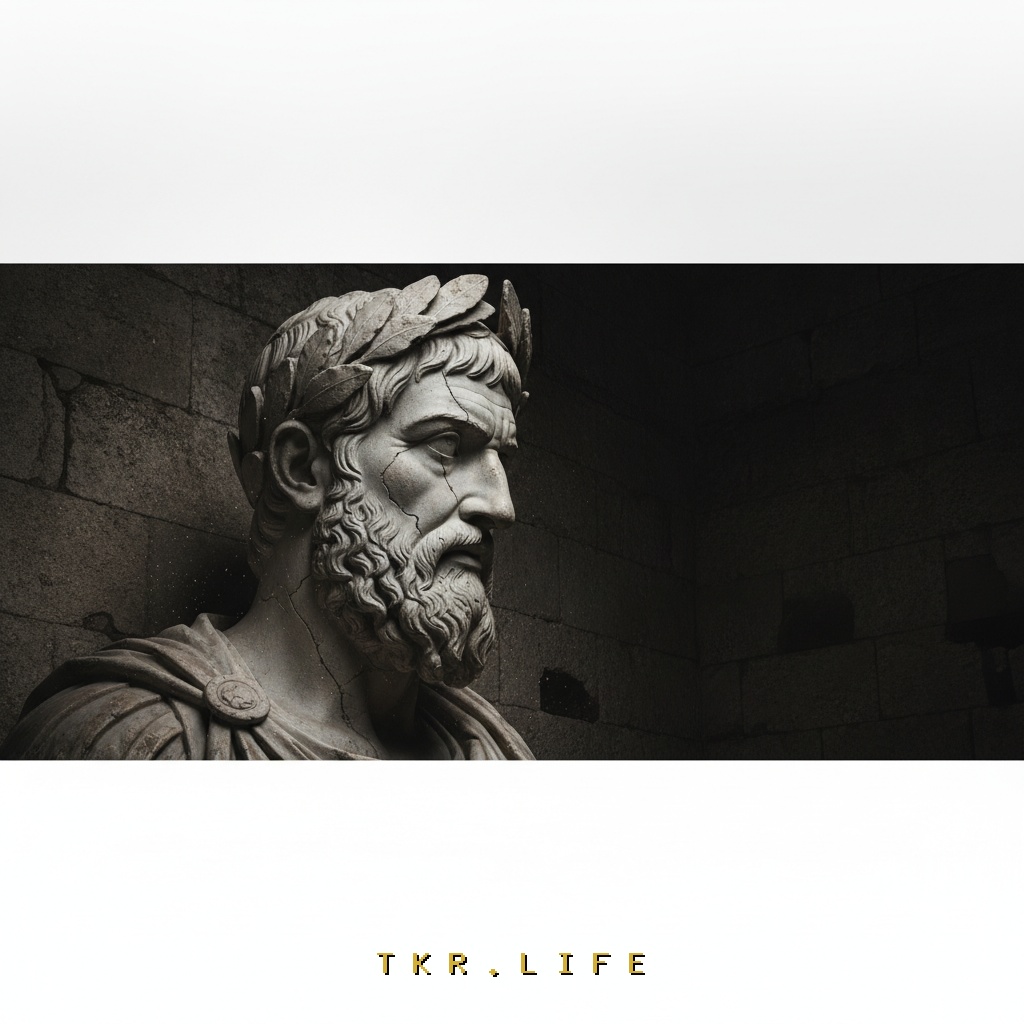
Look at your hands. Look at the room around you. The world does not care about your intentions, your unexpressed potential, or the delicate emotional interior you curate so tenderly. The physical universe operates on brutal, impartial Newtonian mechanics: it exerts weight. It tests structural integrity. It applies continuous, unyielding downward force upon every organism that dares to draw breath.
The mediocre mind views this reality as a hostile persecution. The dilettante spends their adult life whining about stress, scrambling to escape the friction of existence, hunting for low-gravity vacuums where nothing is demanded and nothing is at stake. They do not realize that in eliminating tension, they are actively engineering their own psychic and biological atrophy. You do not need an escape from pressure. You need an uncompromising architecture capable of converting compressive strain into tectonic power. Your standards restructure pressure.
CHAPTER I: The Anatomy of the Signal
In mechanical engineering, pressure is fundamentally defined as force distributed over an area: P = F / A. When structural engineers calculate the load tolerance of a bridge, they do not beg the river to cease flowing, nor do they plead with the wind to abate its velocity. The environmental load is a fixed parameter. The only variable within their dominion is the internal geometry, the tensile strength of the materials, and the rigidity of the joints.
Stoic philosophy operates on identical physics. Epictetus did not teach his students how to construct a world devoid of tyrants, exile, or physical torment; he taught them how to forge an internal constitution so unyielding that external shocks could find no purchase to deform the soul. What the modern neurotic calls “stress” is rarely an objective overload of external demands. It is the systemic failure of an internal standard that was never calibrated to hold weight.
“Circumstances do not make the man; they only reveal him to himself.” — Epictetus
When your standards are ambiguous, permissive, and conditional, pressure acts as a chaotic, pulverizing adversary. It arrives without warning, collides with your soft boundaries, and disperses laterally into panic, chronic anxiety, and executive paralysis. You feel victimized by your calendar, your debts, your competitors, and your responsibilities because you have built no internal conduits through which that energy can travel. You are an unreinforced earthen dam trying to contain a torrential river.
When you establish unnegotiable standards—standards of cognitive clarity, ruthless prioritization, emotional detachment, and instantaneous physical execution—you alter the cross-sectional area through which reality impacts you. The load does not vanish; it is focused. The chaotic, ambient anxiety that once paralyzed you is suddenly compressed through narrow, high-velocity chambers. It ceases to be an existential threat and becomes a directional propellant. Pressure does not break a sovereign mind; it simply reveals the geometry of its scaffolding.
CHAPTER II: The Historical Crucible
Consider the winter of 174 AD along the frozen banks of the Danube. Marcus Aurelius Antoninus, Emperor of the known civilized world, sits inside a drafty military tent at the frontier outpost of Carnuntum. Outside, the temperatures are sub-zero. The air smells of wet wool, burning tallow, and gangrene. Rome is hemorrhaging: the Antonine Plague has decimated up to a third of the empire’s population; the northern Germanic confederations—the Marcomanni and the Quadi—have shattered the frontier legions; the imperial treasury is dry, forcing Marcus to auction off the crown jewels from the Palatine to fund the war; and within months, his most trusted general in the East, Avidius Cassius, will declare him dead and launch a treasonous coup.
Marcus was not an athlete or a born conqueror. He was an aging, chronically ill man plagued by severe chest pains, insomnia, and the profound burden of absolute governance. By all modern psychological metrics, he was an ideal candidate for catastrophic nervous collapse. He was subjected to a crushing ambient load that would have reduced modern executives to catatonic weeping.
Yet what do we find when we open the private journals he wrote to himself by candlelight on that frozen front? We do not find self-pity. We do not find grievances directed at fate, the gods, or the ungrateful populace of Rome. We find an unsparing, geometric tightening of the internal standard:
“Do not waste what remains of your life in speculating about your neighbors, unless with a view to some mutual benefit. To do so is to lose the opportunity of undertaking some other task… Practice even what seems impossible. The left hand, which for lack of practice is slow and useless for other things, holds the bridle more firmly than the right: for it is accustomed to this.” — Marcus Aurelius, Meditations
Marcus survived the frontier and stabilized the Roman world not by wishing the Germanic tribes would vanish, but by treating his own moral, intellectual, and behavioral standards as absolute laws of physics. He restructured the crushing load of imperial survival into a precise, daily moral duty: Wake up. Do not complain. Act justly. Despise fame. Die without trembling. The Marcomannic Wars were chaotic; Marcus was structural granite. Because his standard was impervious to comfort, the immense external pressure had no choice but to forge him into an immortal benchmark of sovereign leadership.
CHAPTER III: The Biological Ledger & The Hidden Tax of Hesitation
The human organism is not wired for perpetual stasis. From an evolutionary perspective, human physiology is an adaptive engine that requires metabolic friction to maintain operational baseline. In the absence of resistance, the musculoskeletal system leaches calcium from the bones, muscle fibers undergo proteolytic degradation, and the central nervous system downregulates dopamine receptors, plunging the brain into anhedonia and lethargy.
Modern behavioral neuroscience illustrates that how your brain processes external demand depends entirely on your cognitive appraisal of agency. When you face high demands with a low personal standard of discipline, the hypothalamic-pituitary-adrenal (HPA) axis activates in a threat profile: cortisol surges, the prefrontal cortex suffers functional decoupling, and your physiology shifts into an inflammatory, evasive survival posture. You experience this neurochemically as chronic, soul-crushing dread.
Conversely, when an individual possesses high, crystalline standards of self-efficacy and absolute responsibility, the identical external load activates a challenge response. The sympathetic nervous system releases norepinephrine and dopamine alongside adrenaline, dilating blood vessels to the brain, enhancing pattern recognition, and sharpening working memory. The load is unchanged; the biological transduction of that load has been structurally inverted.
Every time you hesitate, every time you negotiate with a deadline, snooze an alarm, or soften a standard to accommodate your emotional fatigue, you pay an invisible, compounding interest rate. Hesitation is not a benign pause; it is the active cognitive training of cowardice. You are teaching your neural architecture that your word is negotiable, that your standards are decorative, and that pressure is a valid justification for retreat. Over months and years, this biological ledger accumulates a debt that bankrupts your will.
CHAPTER IV: Modern Sedation vs Sovereign Output
We inhabit a civilizational landscape that has weaponized the elimination of standards. Look at the modern architecture of consumption: infinite scroll feeds designed by behavioral psychologists to harvest your dopamine reserves, on-demand food delivery that eliminates the physical friction of sustenance, algorithmic echo chambers that validate your most fragile neuroses, and a culture that celebrates victimhood as the supreme virtue.
The world around you is whispering a continuous, poisonous lie: “You are fragile. You have worked hard enough. You deserve comfort. Lower your expectations of yourself; the world is too hard.” This is not compassion; it is corporate and systemic sedation. A human being with lowered standards is a passive consumer, an easily manipulated voter, and a predictable biological unit that can be harvested for ad clicks and synthetic pharmaceutical dependence.
The modern trance is designed to make you feel as though your environment is too overwhelming to master, thereby giving you permission to surrender. But observe the paradox: the modern citizen, surrounded by unprecedented luxuries, automated conveniences, and safety nets, reports higher levels of subjective stress and existential anxiety than generations that faced famine, trench warfare, and infant mortality. Why?
Because when you systematically lower your standards of courage, physical grit, focus, and self-restraint, the ambient pressure of everyday life—a difficult email, a social conflict, an unexpected financial shock—hits you with the impact of an artillery shell. You have reduced your psychic surface area to tissue paper. Sovereign output requires the immediate, violent rejection of this civilizational anesthesia. You must set your baseline so high that the trivial hysterias of the modern landscape register as nothing more than atmospheric static.
CHAPTER V: The 5 Sovereign Battle Protocols for Today
Do not read this transmission as academic theory. Theory without ruthless physical execution is intellectual masturbation. For the next twelve hours, you will implement these five non-negotiable protocols to physically restructure how pressure interacts with your life:
- Protocol 1: The Zero-Buffer Deadline (Temporal Compression)
Identify the most intimidating, cognitively demanding objective on your docket today. Cut the allotted time to complete it by exactly 50%. Force the execution through artificial time constraint. When you reduce the temporal buffer, you eliminate perfectionist evasion, self-indulgent side tracks, and bureaucratic delay. The pressure will spike immediately; force your focus to narrow into a laser point and execute through the constriction. - Protocol 2: The Binary Friction Gate
For the rest of this daylight cycle, eliminate all negotiation with your autonomic nervous system. If an action is required—starting a cold shower, picking up the telephone, initiating difficult deep work, hitting the weights—you execute within three seconds of conscious recognition. The moment you debate with your comfort-seeking limbic brain, your standard collapses. Kill hesitation at the threshold. - Protocol 3: The Cold Media Cleanse
Sever all unearned dopamine. From this moment until the sun sets, no passive feeds, no short-form algorithmic video, no recreational browsing, no background audio during deep work. Work in absolute, monastic silence. Re-sensitize your dopamine receptors to the intrinsic friction of complex problem-solving. Make your mind uncomfortably quiet until it has no choice but to pour its pressure into sovereign creation. - Protocol 4: The Direct Confrontation of Drift
Identify the conversation you are evading, the invoice you are avoiding, or the operational failure you are excusing. Confront it before 14:00 today. Walk straight into the pocket of acute social or operational tension. Pressure expands when it is ignored; it shrinks to a measurable, solvable problem the instant you advance directly upon it. - Protocol 5: The Posture of Unflinching Composure
Monitor your physical biomechanics under stress. The moment you feel overwhelmed, your biology will attempt to leak that pressure through shallow breathing, hurried speech, slouching posture, and frantic micro-movements. For the next twelve hours, force your physical vessel into sovereign symmetry: slow your respiratory rate to six breaths per minute, lower your vocal register, hold your spine rigid, and eliminate all nervous fidgeting. Master the shell, and the interior will conform.
CHAPTER VI: The Evening Ledger & Mental Audit
When the daylight has expired and you sit in absolute solitude before sleep, the noise of the marketplace will fade, leaving you alone with the only judge that matters: your own conscience. Do not look for comfort. Look for the ledger. Sit in silence with a pen and an unruled notebook, and demand ruthless answers to these four piercing audits:
- Where did I lower my standard today to avoid short-term biological discomfort, and what long-term tax did I pay for that cowardice?
- When external pressure surged today, did I internalize it as a paralyzing threat, or did I route it through disciplined mechanics into forward momentum?
- How much of my finite, irreplaceable daylight was hijacked by digital sedatives designed to keep me docile and unproductive?
- If this day were the final historical artifact of my character, would it testify to sovereign mastery or pathetic drift?
Write the answers without self-flattery, without moral excuses, and without emotional performance. Look at your failures with the cold detachment of a coroner performing an autopsy. Then, close the book and prepare for tomorrow’s siege.
EPILOGUE: Closing Conviction
Stop waiting for the pressure to subside. The world will never soften its grip. The economic landscape will remain cutthroat, biology will continue its inexorable march toward decomposition, and the unexpected catastrophes of fate will continue to descend upon you without an invitation. The sanctuary of ease you dream about is a cemetery for your potential.
Stop asking the universe to lower the weight. Build a spine that can carry mountains. Raise your internal standards until they become an impenetrable bulkhead against which the chaos of existence breaks itself in vain. When you elevate your standards to absolute, unnegotiable peaks, pressure ceases to be your executioner—it becomes your chisel, your forge, and your ultimate servant. The daylight is bleeding. Stand up, set the standard, and command the pressure.